A paver driveway that has gone grey and patchy looks like it needs replacing. Almost always it needs colour and a seal, which is a fraction of the cost and a fraction of the disruption.
Why pavers lose their colour
Paver colour is in the concrete itself, and ultraviolet light works on it the same way it works on anything else outdoors. Add salt air and years of rain and the surface bleaches unevenly.
Efflorescence adds to it. Minerals migrate to the surface and leave a white haze that reads as dirt and does not come off with a hose.
Dyeing rather than painting
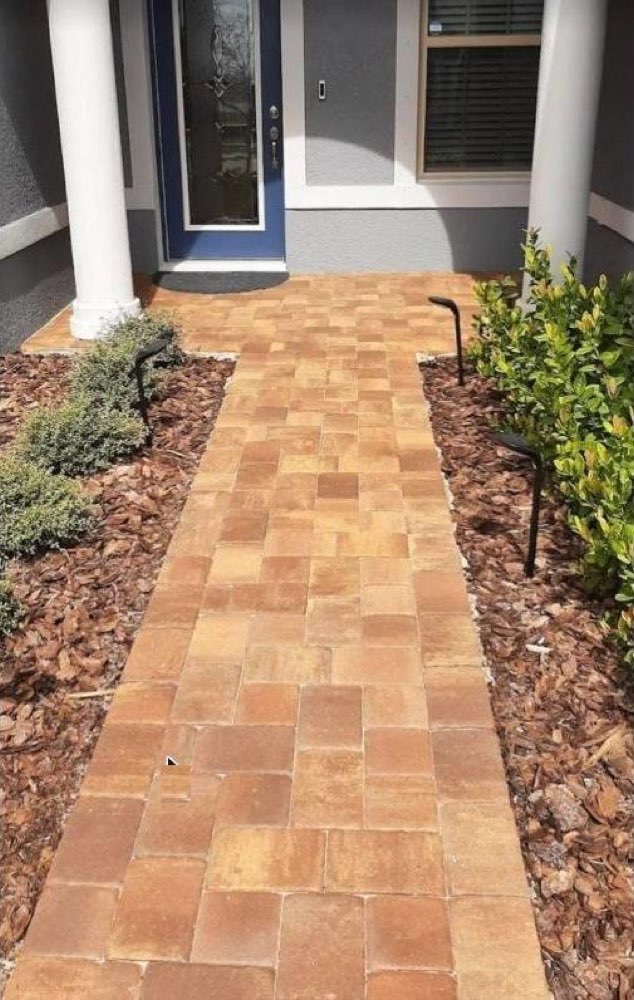
A dye penetrates the paver and restores colour from within, rather than laying a film over the top that will eventually wear off the high points and look worse than the fading did.
Colour can go back close to the original or shift deliberately. It is chosen against the house and the surrounding hardscape, on site.
What the sealer is actually doing
Sealing locks the joint sand. That is the part most people underestimate. Stable joints mean sand stops washing out in heavy rain, weeds have far less to root into, and ants have a much harder time.
It also protects the restored colour, resists oil and stains on a driveway, and makes the whole surface far easier to clean.
When pavers do need more than this
Sunken sections, tree root damage and areas that have lost their base need lifting and re-laying before any of this is worth doing. Colour on an uneven driveway is money spent on the wrong problem.
That gets assessed first, and the honest answer is sometimes that a section needs proper repair before the rest is restored.
Questions about pavers
Will sealing make my pavers shiny?
That is a choice. Finishes run from a natural matte look through to a wet look with noticeable sheen, and it is worth deciding by looking at samples on your own pavers rather than in a brochure.
Does sealing stop weeds completely?
It dramatically reduces them by stabilising the joint sand so there is far less for seeds to root into. Anything that lands on top and takes hold still needs pulling occasionally.
Can faded pavers be matched to newer ones?
Often, yes. Dye gives real control over colour, which is useful where a section has been replaced or an extension has been added and the two no longer match.