
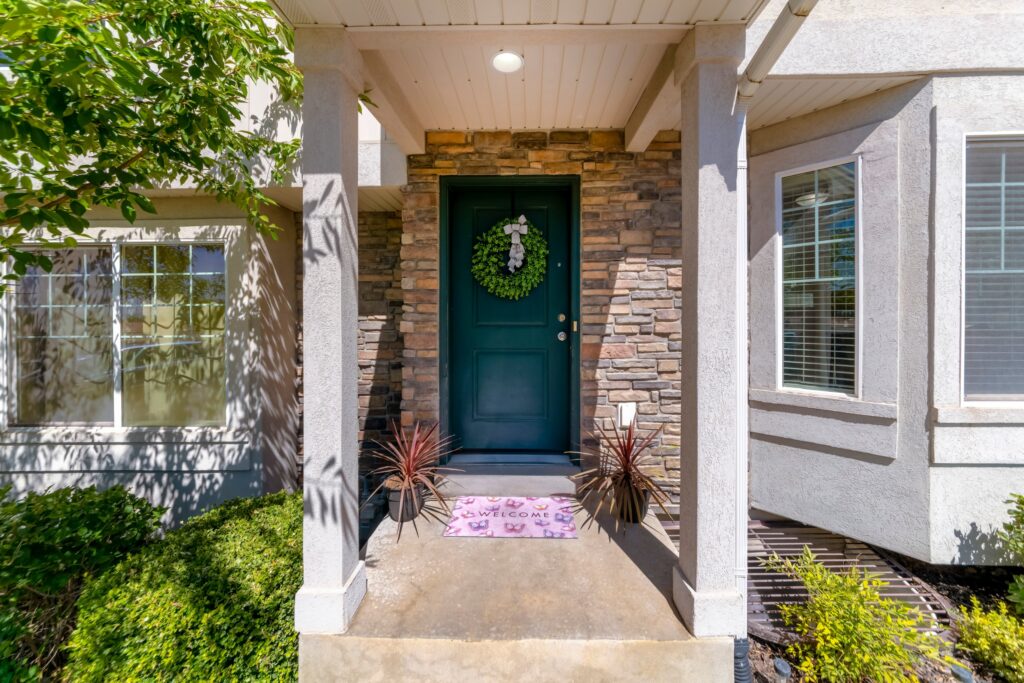
A painted block wall disappears. The same wall faced in stacked stone is the first thing anyone looks at. The material is about an inch thick. The effect is not.
It is a facing, not a wall
Stacked stone veneer carries no load. It hangs on the wall that is already there, the way tile hangs in a shower. Nothing structural changes, which is why it can go on a house that is finished and lived in.
It comes in two families. Natural stone veneer is quarried rock split down to a thin profile, so every piece is genuinely different and the colour runs all the way through. Manufactured veneer is cast concrete, coloured in the mix and moulded from real stone, which makes it lighter, cheaper and far more consistent from box to box.
Neither is the right answer on its own. Consistent is good on a long entry wall where a wild piece would stand out. Varied is good on a column or a fireplace where the eye is close and repetition gets noticed.
What holds it on
This is where stone jobs go wrong, and it is invisible once the last piece is set.
On the block and stucco walls most houses here are built from, the stone bonds to a scratch coat worked into a sound, clean surface. Chalky paint, loose stucco or a sealed surface gives the mortar nothing to grab, so anything failing has to come off first. That is preparation, not stonework, and it is the part that decides whether the wall is still tight in ten years.
On a wood framed wall the sequence is longer: a weather resistive barrier, then metal lath, then the scratch coat, then the stone. Skip the barrier and the wall behind the stone stays wet. The stone will look perfect while that happens.
Where it earns its keep
Stacked stone works where a surface is flat, vertical and close to where people stand. Entry walls and the columns either side of a front door. Outdoor kitchen and bar fronts. The knee wall around a pool deck. Mailbox and address pillars, which are small enough to finish in a day and are the piece every neighbour drives past.
It pairs with the horizontal work. A resurfaced pool deck and a stone faced knee wall read as one project rather than two repairs, because the deck gives the eye a floor and the stone gives it a wall.
What Florida does to it
Salt air, hard UV and driving rain are harder on the mortar joints than on the stone. Joints that were packed properly hold; joints that were rushed open up and let water behind the facing.
Natural stone is porous and takes a breathable sealer, which deepens the colour and slows staining. Manufactured veneer is coloured through the body and often needs nothing, though a sealer still helps on a wall that catches pool splash or sprinkler overspray.
The detail that matters most costs nothing: stone should stop above grade, above the paving, above the mulch bed. Stone that runs down into soil wicks moisture up behind itself all year, and a white bloom of efflorescence on the lower courses is the first sign of it.
Stacked stone questions
Is stacked stone real stone?
Both kinds are sold under the name. Natural veneer is quarried rock cut thin. Manufactured veneer is cast concrete moulded from real stone and coloured in the mix. From six feet away most people cannot tell them apart. Up close, on a column you brush past, natural stone reads differently. We will walk you through which one suits the wall and the budget.
Can it go over my existing stucco or block?
Usually, yes, and that is the common case here. The wall has to be sound and clean first. Hollow stucco, flaking paint or crumbling block has to be cut out and repaired before any stone goes on, because the stone is only as attached as the surface underneath it.
Does it need sealing?
Natural stone benefits from a breathable sealer. Manufactured veneer often does not need one. Either way, sealing a wall that takes pool splash or sprinkler spray is worth doing, and it is far easier to do at installation than after a season of staining.