
Coating work has almost no barrier to entry. The material is available to anybody, the finished photographs all look the same on the day, and the failure shows up long after the invoice is paid. Here is how to tell the difference beforehand.
Ask how the slab gets prepared
This is the single most useful question, and the answer sorts people fast.
A specialist will say grinding, or shot blasting, and will talk about opening the surface so the coating can key into it. They may mention a profile, which is the measured roughness the surface needs for a given system.
Somebody having a go will say pressure washing, possibly with an acid etch. Pressure washing cleans a slab. It does not give the coating anything to grip, and almost every coating that peels off in one continuous sheet came off a surface that was only washed.
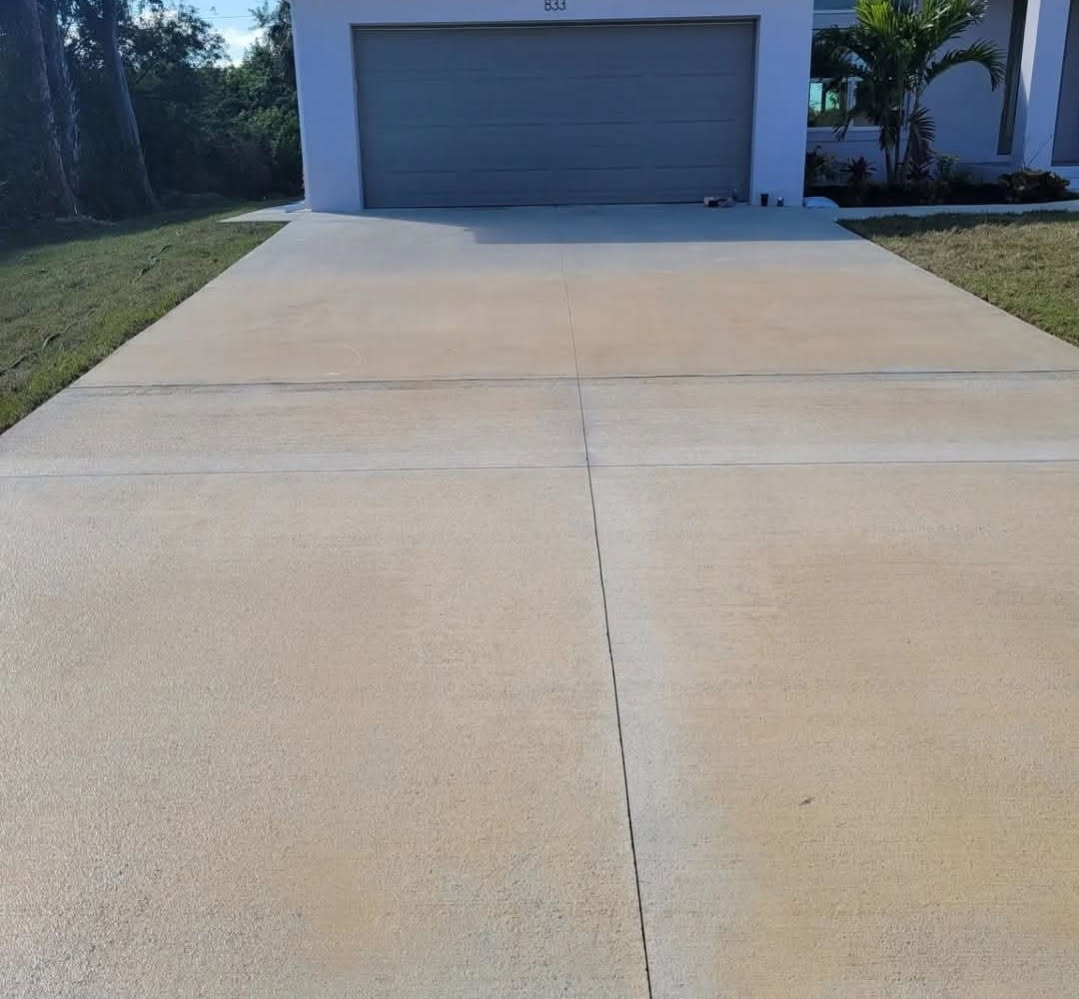
Ask what happens about moisture
In Florida this is the question that saves floors. Plenty of slabs here sit on damp ground with no vapour barrier beneath them, and they push moisture upward as vapour all day.
A specialist knows that and will test where there is any doubt, with a calcium chloride test or a relative humidity probe, then choose a moisture tolerant primer or a breathable system based on what comes back.
Somebody who has never heard of the problem will quote the same product for every slab in the county and will blame the weather when it blisters.
Ask which product, and why that one
There is no single best coating. There are systems that suit particular conditions, and the reasoning is what you are listening for.
Standard epoxy outdoors in Florida sun ambers and chalks, so outdoor work wants a cementitious system or a polyaspartic topcoat. A pool deck needs grip when wet and a surface that stays cool enough for bare feet. A driveway needs thickness and the ability to take point loads.
If the answer to every surface on the property is the same product, the product was chosen before the property was looked at.
Ask to see the repairs, not the finishes
Every contractor has photographs of a finished floor. Ask instead for the ones taken partway through: the slab ground back, the cracks cut out and filled, the spalled patch rebuilt.
Those photographs exist only if that work was done, and they are the clearest evidence of what you are buying. The decorative part of a coating job is the last day. Everything that decides how long it lasts happened before it.
Choosing a contractor
Why are two quotes for the same driveway so far apart?
Almost always preparation and repair. The lower number usually covers cleaning and coating. The higher one usually includes grinding, crack repair and rebuilding any failed areas. The surfaces look identical on the day they are finished.
Is a longer warranty a good sign?
Only if it says what it covers and who stands behind it. A warranty on the material comes from the manufacturer and is often void if the slab was not prepared to their specification. The useful question is what the contractor warrants about their own workmanship.
Should I be suspicious of a quote given over the phone?
For anything beyond a straightforward garage floor, yes. Slab condition, moisture and drainage cannot be assessed without standing on the surface, and those three things decide both the price and the system.