
Most Jensen Beach concrete that looks finished is not finished. The surface is tired, but the slab underneath is sound. That difference is the whole argument for an overlay.
What an overlay actually is
An overlay is a thin, bonded layer applied directly over existing concrete. It is not a paint and it is not a patch. The surface is ground open first so the new material keys into the slab rather than sitting on top of it.
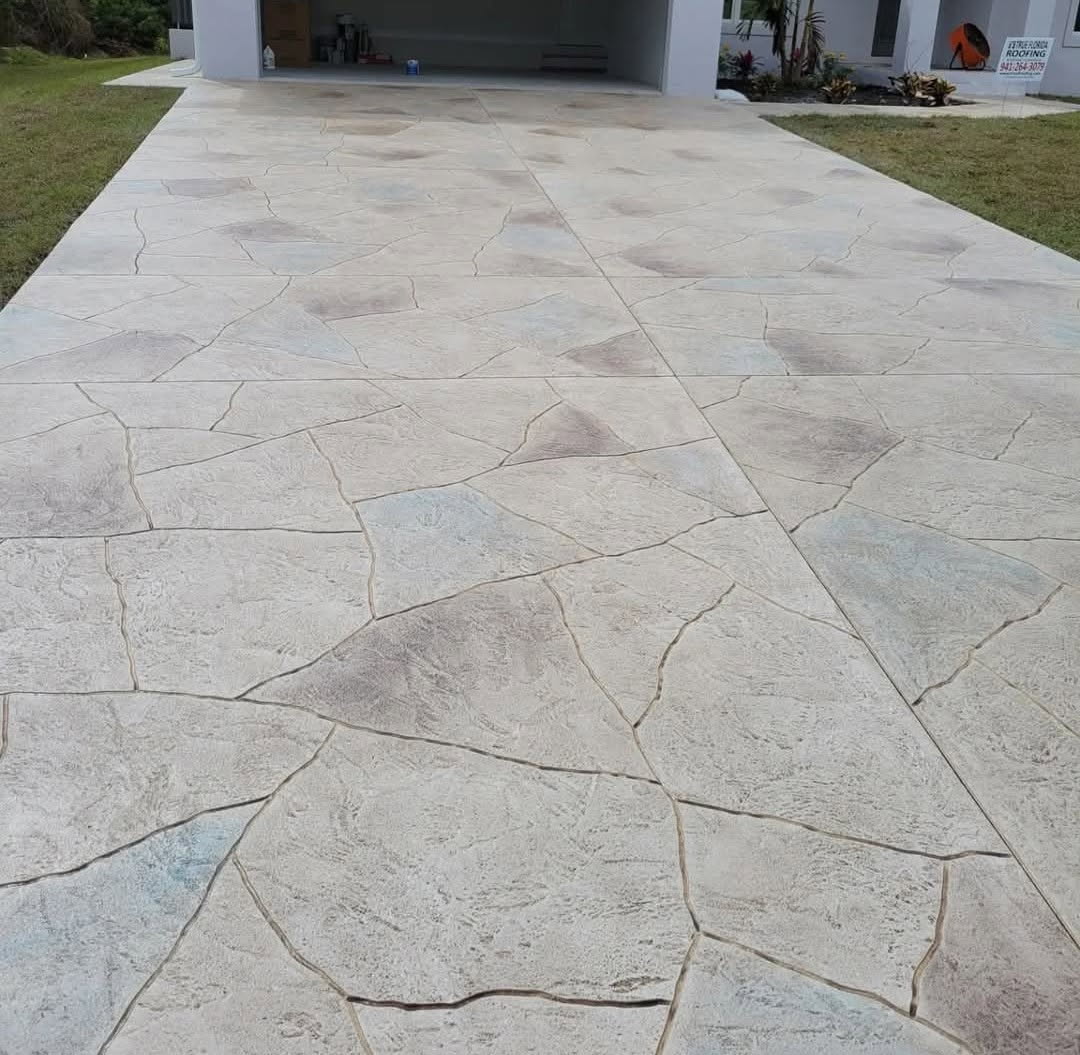
Once it is down it can be textured or stamped while it is workable, which is how a plain grey driveway becomes random ashlar slate, travertine or flagstone. The pattern is formed in the new layer, not carved into the old one.
Why concrete ages the way it does here
On the Treasure Coast the damage is usually cosmetic before it is structural. Salt air, direct sun, pool chemistry and heavy summer rain work on the top few millimetres of a slab. Colour washes out, the surface goes chalky, and hairline crazing spreads.
None of that means the concrete has failed. It means the wearing surface has. An overlay replaces that surface and leaves the structure you already paid for in place.
When an overlay is not the answer
An overlay follows the slab beneath it. If a section has sunk, heaved against a root, or cracked all the way through and moved, a new surface will eventually telegraph the same problem.
Those slabs need addressing first, and in some cases replacement is genuinely the right call. It is worth knowing that before work starts rather than after, which is why the estimate visit looks at the concrete rather than quoting from a photograph.
How the finished surface behaves
Colour and pattern are chosen against the house rather than from a catalogue, and the finish is sealed once it has cured.
The sealer used on these installations carries a grip additive, so the finished surface is not slick underfoot when it is wet. On a pool deck or an entry path in Florida, that matters more than the colour does.
Questions from Jensen Beach homeowners
How do I know if my slab can take an overlay?
It is assessed in person. The things that matter are whether the slab is stable, whether cracks have moved, and how sound the surface is once it has been ground. That assessment is part of the free estimate.
Will the pattern hide the cracks that are already there?
Fine surface cracks and crazing are covered by the new layer. Cracks that run through the slab and are still moving are treated first, and honest expectations are set about them, because a moving crack will eventually show through any surface.
Is an overlay slippery when it gets wet?
The texture itself provides grip, and the sealer includes a non-slip additive. It is a common concern around pools and entryways, particularly in households with older adults or young children.