
Concrete does not fail here the way it fails further north. There is no freeze and thaw. What there is instead is relentless ultraviolet light, daily heat cycling, salt in the air and a great deal of water arriving quickly.
Ultraviolet light takes the colour first
Sunlight breaks down pigment and many sealers. Colour fades unevenly, because the deck is not shaded evenly, and the side that takes afternoon sun goes first.
It is usually the earliest visible sign, and it is cosmetic. It also means the sealer is working less well than it was, which is what allows the next problems to start.
Heat cycling and the surface
An exposed slab can move through a wide temperature range in a single day, expanding and contracting slightly each time. Over years that contributes to surface crazing, the fine map of hairline cracks that appears across older decks.
Colour matters here in a practical way. A lighter finish absorbs less heat, which is more comfortable underfoot and easier on the surface.
Salt, chlorine and rain
Near the coast, salt is carried in the air and settles on everything. Combined with pool chemistry and sunscreen, it works into any unsealed or tired surface and stains it.
Summer rain arrives fast and heavy. Water that cannot drain sits, and standing water on a porous surface is how you get discolouration and, eventually, growth.
What actually protects it
Sealing is the working part. A sealed surface takes the ultraviolet, the salt and the chemistry instead of the concrete underneath, and re-sealing on a sensible cycle is far cheaper than resurfacing.
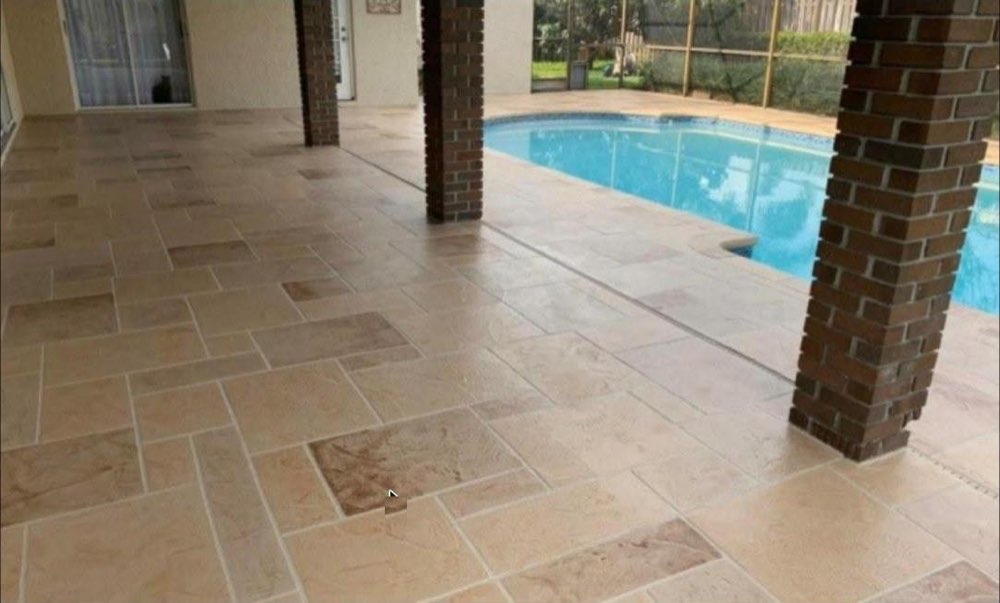
Where a deck has already gone past that, a textured overlay rebuilds the surface and starts the clock again, with the grip additive in the sealer so it is not slick when it is wet.
Questions about weather and concrete
How often should a pool deck be re-sealed in Florida?
It depends on exposure, how much sun the deck takes and how heavily it is used, so it is judged on the surface rather than the calendar. A deck that is starting to look chalky or is absorbing water is telling you it is time.
Does a covered lanai need the same attention?
Less, but not none. Shade removes most of the ultraviolet damage, though salt air, humidity and foot traffic still work on the surface.
Is fading a sign the deck needs replacing?
Rarely. Fading is a surface and sealer issue, not a structural one. It usually means re-sealing, or resurfacing if the surface itself has gone.